
Module 7 · Emergency Medical Services and EMT pathway
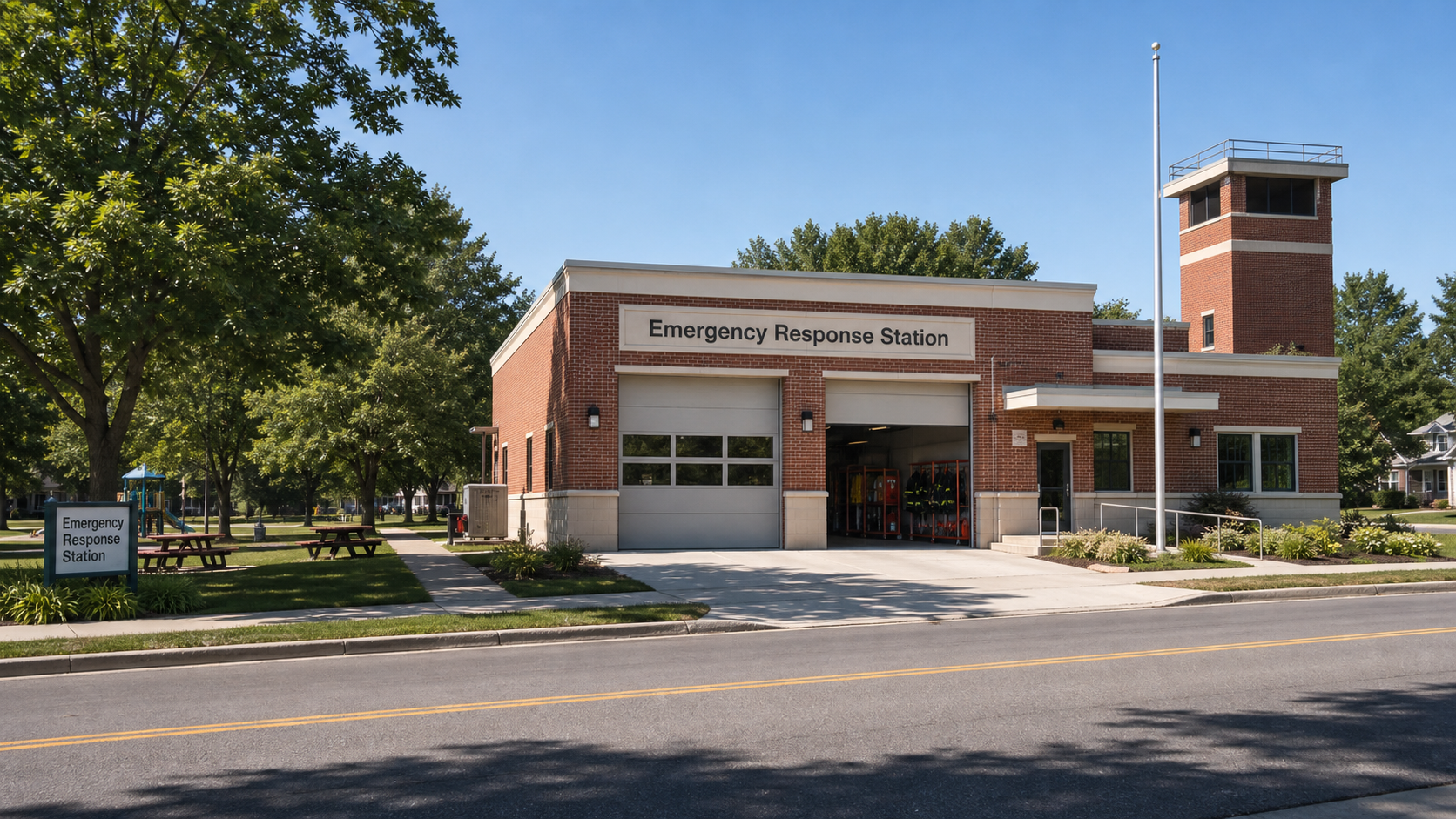
Emergency Response Station
Follow the information chain from a 911 call through field response and hospital handoff. Explore EMT preparation, teamwork, work realities, and the questions to ask before choosing a route.
How this module works
What you will explore
Information chain
See how the call center, dispatcher, field crew, and hospital team move exact information from one handoff to the next.
Training and work
Build a hypothetical EMT training week and look at preparation, documentation, cleaning, restocking, schedules, and recovery.
Fit and next steps
Compare strengths, practical factors, regional examples, and current official sources before deciding what to explore next.
Who you will meet
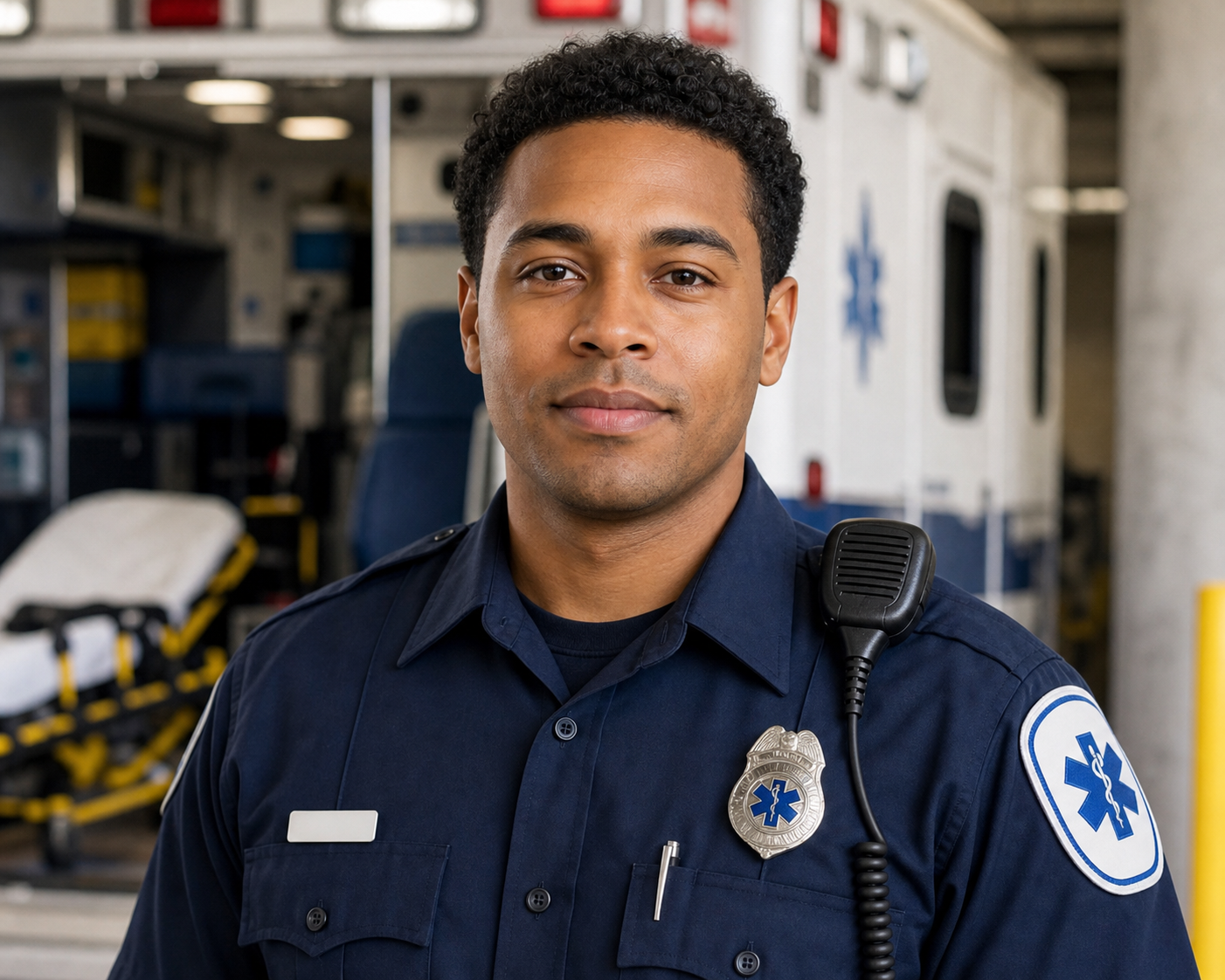
Marcus Reed, EMT
Marcus prepares before the call, checks safety, listens for exact facts, works with his partner, documents, and gives clear handoffs.
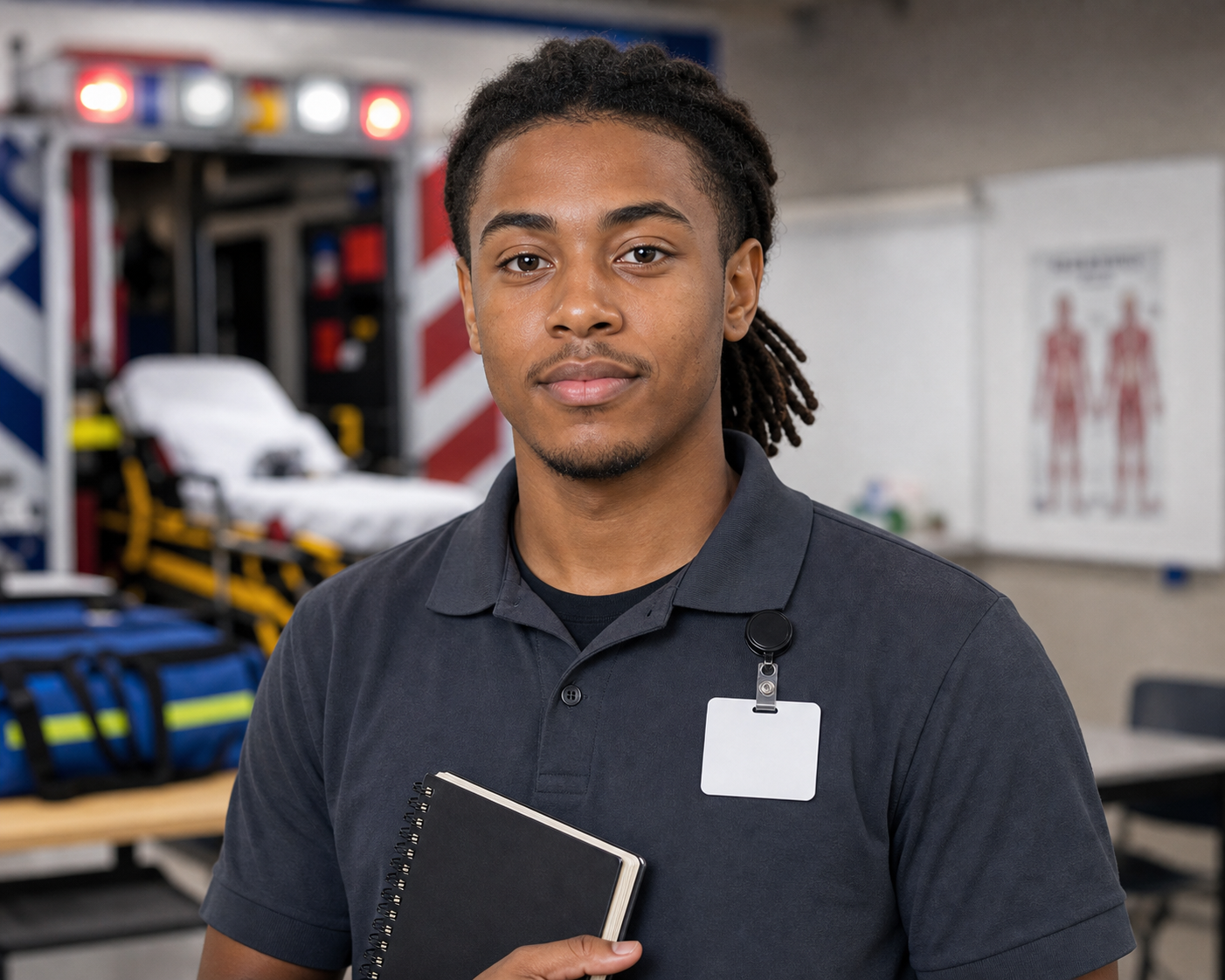
Jayden Brooks
Jayden is learning that action depends on class, lab, study, travel, feedback, attendance, requirements, and rest.
Four units in this module
Follow the response chain
Compare related roles and map the information that moves from the caller through the hospital team.
Build Jayden's training week
Plan a hypothetical week with class, lab, study, testing, travel, requirements, supplies, and recovery.
Move the message safely
Listen to the podcast, complete Marcus's Response Chain, and draft an observation-based handoff.
Check fit and next steps
Use strengths, demands, practical factors, regional examples, and current sources to choose a next question.
Emergency response roles quick guide
Call taker or dispatcher
Receives, confirms, sends, and tracks emergency information using the agency's systems and approved procedures.
- Requirements depend on the agency and job.
- California POST rules apply to participating law-enforcement agencies, not every dispatcher role.
- Ask about training, typing, schedule, background, and certification rules.
Emergency medical technician
An EMT responds, checks safety, provides care within EMT training and rules, communicates, transports when needed, documents, and gives handoffs.
- Current California minimum course: 170 hours.
- Initial certification includes required testing, a local application, and a background process.
- Initial California EMT certification requires age 18.
Paramedic
A paramedic completes more advanced prehospital training, earns a California license, and completes local requirements before practice.
- Current California training minimum: 1,094 hours.
- Local EMS Agency accreditation or orientation follows state licensure.
- EMT is not an automatic promise of entry, licensure, or employment.
Emergency department technician
An emergency department technician may support licensed hospital staff with patient care, transport, equipment, stocking, documentation, and clerical work.
- The title and tasks vary by employer.
- Ask what EMT, paramedic, BLS, experience, or other requirements apply.
- One hospital's requirements are not a statewide rule.
Activity lineup
Roles Quick Guide
Read the guide above before comparing roles. Notice which requirements are state, local, agency, program, or employer based.
Response Chain Map
Arrange at least six roles, draw four information arrows, and explain what could be lost in one unclear handoff.
Build Jayden's EMT Training Week
Build a hypothetical week, circle one pressure point, match one support, and write one question for the program.
Before the Siren: The Information Chain
Use the Keyword Catcher while you listen or read. Choose one word that explains how the response chain stays clear.
Marcus's Response Chain
Choose what protects safety, accuracy, and teamwork. You will not diagnose or choose treatment.
Information Handoff Huddle
Draft a short message with context, exact facts, and what the next team needs to know. Compare only after your own draft.
Emergency Response Fit Check
Check strengths, mark practical factors, and choose one clue from the module. Your fit response may stay private.
Next-Step Planner
Choose yes, maybe, or not right now. Leave with one action, one official or trusted source, and one question.
Podcast transcript
Use this text alternative for Before the Siren: The Information Chain.
Read the complete podcast transcript
Welcome to the CareTown Emergency Response Station.
My name is Marcus Reed. I am a fictional CareTown EMT. The career I help you explore is real, but this story is not a real call and it is not medical training.
When people picture emergency response, they may picture lights, motion, and the moment an ambulance arrives. I picture the work that starts before that moment.
Before a shift, my partner and I check the vehicle. We look at equipment, supplies, fuel, communication tools, and the items our team expects to find. We do not wait for a call to discover that something is missing.
Preparation may not look dramatic. It is still part of patient safety.
Then a call enters the system.
At a 911 center, trained workers listen, confirm the location, gather information, and follow approved agency protocols. A dispatcher sends the right resources and keeps track of them. The field team listens for the address, known safety information, and the reason help was requested.
That message has already passed through more than one person before I hear it.
Imagine a fictional call from a CareTown job fair. An adult worker says, “I feel dizzy, and my chest feels tight.” A coworker asks for help.
I do not need a dramatic guess. I need the exact location, what was reported, what the scene is like, and what my partner and I must confirm when we arrive.
Jayden Brooks is an EMT student in CareTown. Jayden likes action. He is learning that the fastest-looking choice is not always the safest choice.
If an entrance is blocked by moving equipment, the team does not ignore the hazard. The crew coordinates a safe way in. If information changes, the team gives an update. If someone says exact words that matter, those words should not be replaced with a guess.
Emergency response is full of small moments like that.
Listen.
Confirm.
Communicate.
Follow the team's procedures.
Ask for help when the situation needs more support.
My partner and I each have responsibilities. A paramedic has a different level of training and a California license. Dispatchers have their own training and agency rules. At the hospital, emergency department technicians, nurses, respiratory therapists, physicians, and other workers may continue the response.
No one person is the whole system.
The hospital handoff matters because the next team was not standing beside us for the entire call. They need a clear sequence. They need observations. They need to know what trained workers did and how the person responded. They need questions or gaps to be clear.
A handoff is not a performance. Clear beats clever.
The call also does not end when the patient enters the hospital.
There may be documentation to finish. Equipment may need cleaning. Supplies may need restocking. The vehicle may need to be made ready again. The team may need a short check-in after a difficult call.
Some shifts are busy. Some include waiting. Some include transport between facilities. Some include nights, weekends, holidays, outdoor weather, lifting, bending, and emotionally hard moments.
That honest picture matters when you explore fit.
Jayden's student week also has more than one part. There is class. There are skills and scenario labs. There is studying, feedback, test preparation, travel, attendance, and rest. California EMT certification has official steps after approved training. A student should check the current program, testing, Local EMS Agency, background, and employer requirements before making a plan.
You do not need to decide today.
Maybe you are drawn to field work. Maybe the call center fits your listening and computer skills. Maybe a hospital emergency department role interests you. Maybe the schedule or demands make you want to ask more questions. Maybe another CareTown stop fits better.
All of those answers can be useful.
Before you close your keyword page, choose one word from this episode.
Maybe your word is prepare.
Maybe it is exact.
Maybe it is team.
Maybe it is handoff.
Write why that word matters. Then write one question you would ask a dispatcher, EMT, paramedic, emergency department technician, training program, employer, or Local EMS Agency.
Emergency response may move fast.
The information chain has to stay clear.
That is where the team begins.
Choice 1 of 5
Marcus's Response Chain
Information Handoff Huddle
Real regional examples
ICEMA
The Local EMS Agency for San Bernardino, Inyo, and Mono Counties. Use its current pages to verify regional EMT certification and paramedic accreditation.
CONFIRE dispatcher trainee
One real emergency-services dispatcher classification. Training, schedule, and opening details may change.
ARMC emergency room technician
One real hospital support classification with employer-specific requirements. It is not a statewide rule.