
Module 6 · Diagnostic Services Pathway
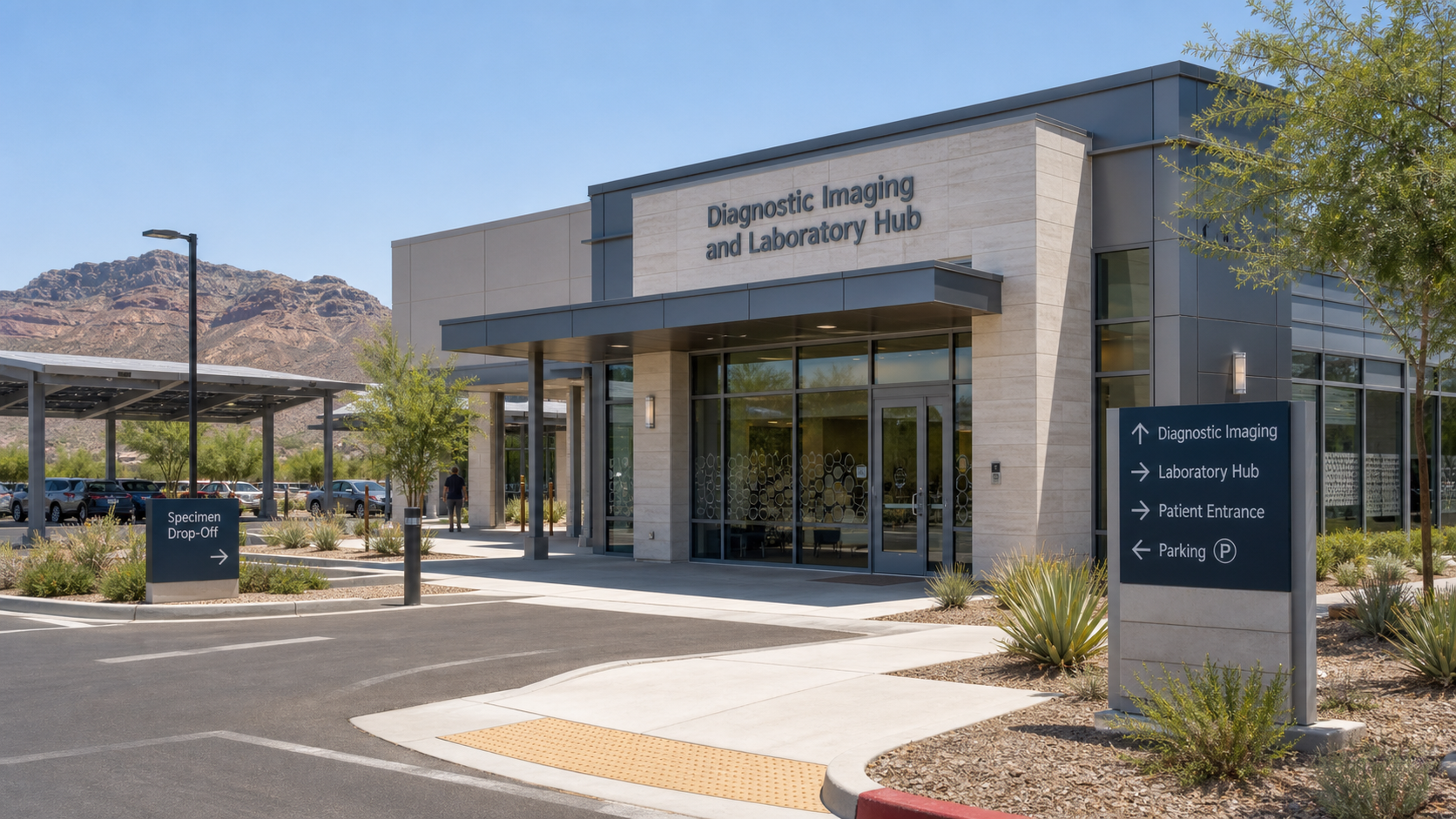
Diagnostic Imaging and Laboratory Hub
Follow information from an order to an image or specimen handoff. You will explore how technology, patient communication, labeling, safety checks, and careful teamwork support accurate diagnostic services.
How the course fits together
The full CareTown journey
Welcome comes first. After that, your class can visit pathway modules in any order.
One pathway visit
This module is a four-hour visit to diagnostic imaging and laboratory services.
One hour of the visit
Each unit has one purpose. Your class may do one, two, or all four units at a time.
One task inside a unit
You may read, listen, map, choose, discuss, write, or reflect during an activity.
Start your visit
Meet Talia and Elijah
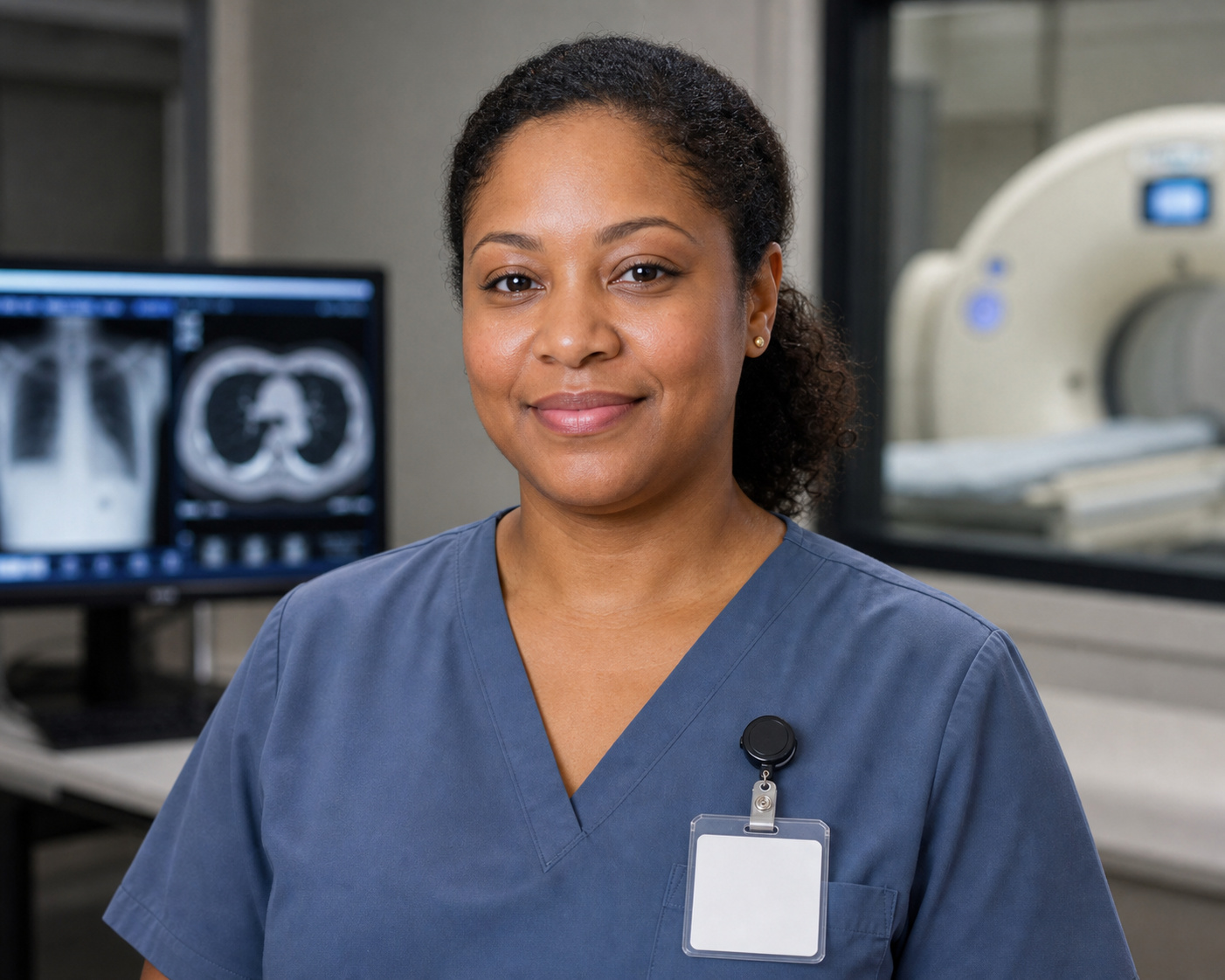
Talia Brooks
Talia is a radiologic technologist. She combines technology with patient comfort, privacy, positioning, safety screening, accuracy, and clear explanation.
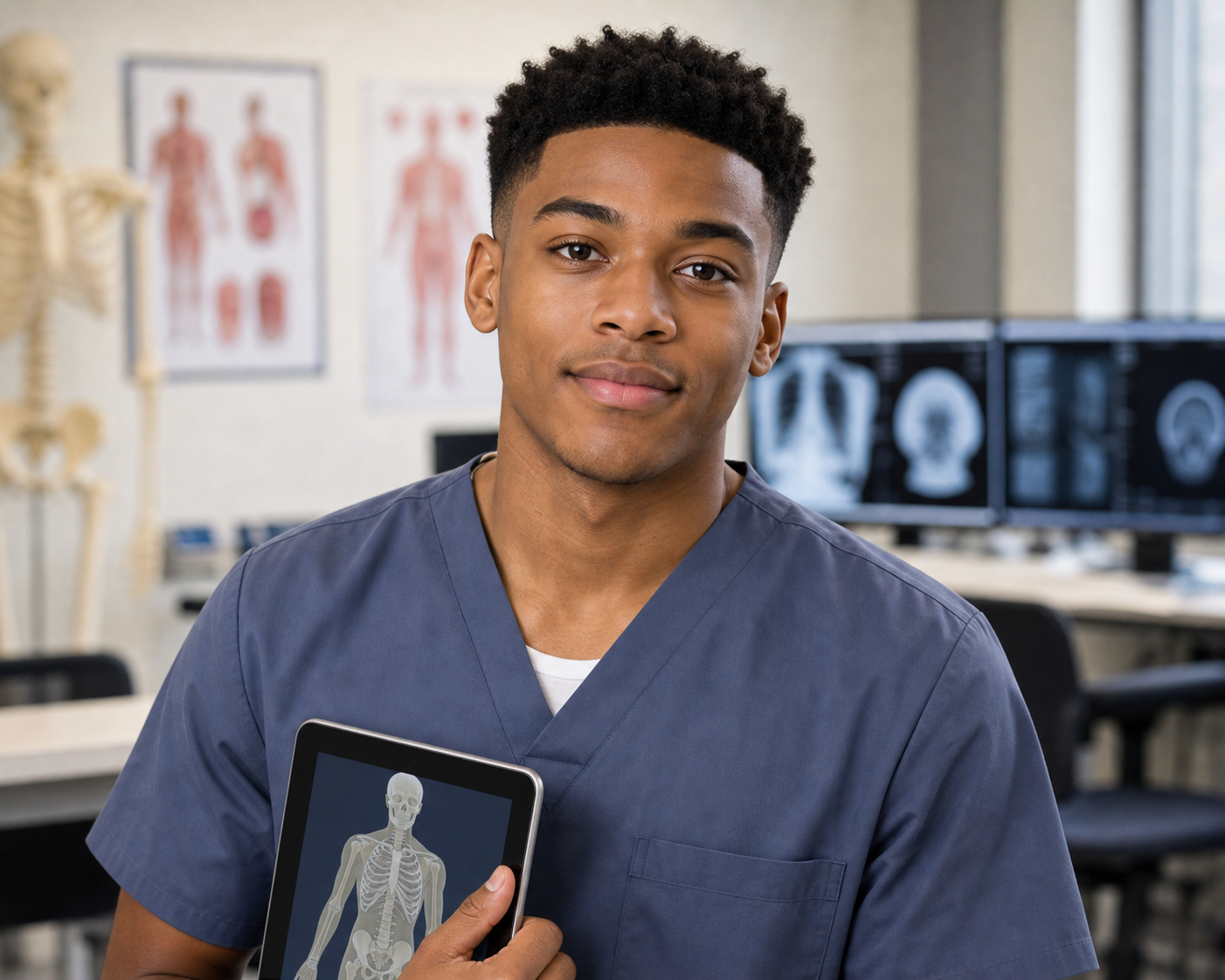
Elijah Carter
Elijah is a diagnostic services student. He is learning anatomy, physics, safety procedures, positioning practice, lab workflow, and patient communication.
Four one-hour units
Enter diagnostic services
Meet imaging, laboratory, specimen-processing, and diagnostic-testing roles. Map where their work connects.
Week in the life of a diagnostic services student
Balance anatomy, physics, safety, positioning or lab practice, clinical learning, study, travel, life needs, and support.
Week in the life of diagnostic services work
Explore patient communication, screening, positioning, specimen labeling, quality checks, privacy, technology, and teamwork.
Diagnostic services fit check
Consider technology, science, patient care, precision, specimens, physical demands, schedules, and your next question.
Pathway and roles quick guide
Radiologic technologist
Works with patients and imaging equipment, follows safety and positioning procedures, and checks image quality within the professional role. A radiologist or other qualified clinician interprets the images.
Sonography, MRI, nuclear medicine, and radiation therapy
These are different specialties with different education, credential, and California requirements. One pathway does not automatically qualify a person for another.
Specimen support and laboratory personnel
Work may include receiving, labeling, preparing, transporting, or testing specimens. The allowed tasks depend on the role, license, training, and workplace.
MLT, CLS, histology, and neurodiagnostic roles
“Nearby” means real occupations that may share a diagnostic setting or workflow. It does not mean the roles have the same duties or that one automatically leads to another. Medical laboratory technician, clinical laboratory scientist, histology, and neurodiagnostic roles each have their own education and employer requirements.
Activity lineup
Diagnostic Services Role Guide
Compare imaging, laboratory workflow, specimen support, and nearby specialties. Record one difference and one question for each area.
Role and Modality Map
Sort roles by imaging, laboratory, specimen, or team-support work. Add the training or credential question you would verify for each role.
Build Elijah's Week
Plan a sample week with science class, practice, clinical learning, study, travel, food, rest, and support. Mark one pressure point and one support.
Before the Result: The Accuracy Chain
While you listen or read, record three to five words, one idea you want to discuss, and one question to verify.
Talia's Diagnostic Workflow
Make choices about identity, screening, explanation, labeling, teamwork, and escalation. You will not interpret results or choose treatment.
Accuracy Chain Huddle
Build a four-check workflow that shows where identity, screening, labels or images, and team handoffs need attention.
Diagnostic Services Fit Check
Mark what interests you, what may be hard, what support could help, and whether your answer is yes, maybe, or not right now.
Reflection and Next Question
Record one role, one work reality, one training question, and one next step. Your fit answer may stay private.
Podcast transcript
Use this text alternative for Before the Result: The Accuracy Chain.
Read the complete podcast transcript
Welcome to the CareTown Diagnostic Imaging and Laboratory Hub.
My name is Talia Brooks. I am a fictional CareTown radiologic technologist. The career I help you explore is real, but this story is not a real patient case and it is not medical training.
When people picture diagnostic services, they may picture a large imaging machine, a laboratory tray, or a result appearing on a screen.
I picture what has to happen before that result.
As you listen, keep your Podcast Keyword Catcher nearby. Notice words that describe accuracy, privacy, teamwork, and professional boundaries.
The approved request must connect with the correct patient. Safety questions need qualified attention. Privacy must be protected. An image or specimen must remain connected to accurate information. The next team needs a clear handoff.
Each step is part of an accuracy chain.
Imagine a fictional CareTown patient who needs imaging and laboratory work to help the care team understand new symptoms. The patient may feel uncertain. The team has more than one task to coordinate.
My role is not to guess the diagnosis or interpret the final image. As a radiologic technologist, I work with the patient and imaging technology, follow approved safety and positioning procedures, explain the process in plain language, protect privacy, and check image quality within my professional role. A radiologist or another qualified clinician interprets the images.
Before the workflow moves forward, I compare the approved request with the information available through the team's process.
Then I notice a mismatch.
This is not a moment to rewrite a detail from memory, choose the answer that looks close, or hope another worker catches it later. It is a pause point.
I stop the handoff, protect the information, and follow the approved discrepancy or escalation process. The qualified team member helps resolve what needs clarification.
Accuracy is not about never having a question. It is about knowing what to do when a question appears.
The same idea follows the information across the hub.
A clinic worker may send verified information. A nurse may clarify part of the approved request. A laboratory worker may receive, label, prepare, transport, or test a specimen, depending on that worker's role and authorization. A radiologist or another qualified clinician may interpret diagnostic information. The team receiving the handoff needs to know what was completed, what was confirmed, and what still needs attention.
No one person is the whole system.
Diagnostic services is also not one career wearing different name tags.
Radiography, sonography, MRI, nuclear medicine, and radiation therapy are separate imaging specialties. Laboratory pathways may include specimen-support roles, medical laboratory technician, clinical laboratory scientist, histology, or other laboratory and pathology-support work. Neurodiagnostic careers are another distinct route.
These workers may contribute to a connected workflow, but their education, credentials, licenses, supervision, and duties can differ. Completing one route does not automatically qualify a person for another.
Elijah Carter is a fictional diagnostic services student in CareTown. He was first drawn to the technology. Now he is learning that the work also depends on science, patient communication, precise routines, and the willingness to pause.
His training week may include anatomy, physics, safety coursework, classroom practice, positioning or laboratory practice, supervised clinical learning, study, travel, meals, rest, and other responsibilities. Some activities may happen at a different time or location from class.
Elijah practices with simulated information and instructor guidance. He does not position a real patient, operate imaging or laboratory equipment independently, use radiation, collect or handle a specimen, interpret an image or result, diagnose, or choose treatment. When he notices an unmatched detail, he brings it to the supervising professional.
That careful pause is part of learning.
The work can feel meaningful. You may help a nervous patient understand what to expect. A technologist or laboratory worker may create useful images within that role, protect the identity connected with a specimen, or support information that helps a qualified care team make decisions.
The work can also be demanding. Depending on the role, it may include standing, movement, repeated checks, close attention to private information, specimens, urgent requests, technology problems, and accurate work when you are tired. Physical tasks and exposure conditions vary by specialty and workplace.
That is why a career plan needs more than a job title.
For radiography, check the current program, its accreditation information, credential expectations, and California Department of Public Health Radiologic Health Branch requirements. For laboratory careers, check the current program, employer, accreditor when applicable, and California Laboratory Field Services requirements for the exact title. For every diagnostic route, ask about admissions, costs, schedules, clinical hours, technical standards, safety requirements, credential eligibility, and support or accommodation processes.
Requirements can change. Any regional program you find is only an invitation to investigate, not a guarantee of admission, certification, licensure, transfer, or employment.
Now turn to your Podcast Keyword Catcher. Record three to five words that stand out.
Maybe your words are identity, pause, privacy, precise, or handoff.
Write one idea you want to discuss. Then write one question to verify with a current program, California agency, accreditor, employer, counselor, or worker in the exact specialty.
As you think about fit, consider technology, science, patient contact, precision, privacy, specimens, physical demands, schedules, study time, travel, and support. Interest in one part does not require you to like every diagnostic pathway.
Your answer can be yes, maybe, or not right now.
You do not need to choose today.
Before the image, before the specimen handoff, and before the result, careful people protect the accuracy chain.
One detail at a time.
Choice 1 of 5
Talia's Diagnostic Workflow
Accuracy Chain Huddle
Meaningful and challenging parts
What may feel meaningful
You may help a nervous patient feel informed, create a clear image, protect a specimen's identity, or support information that helps the care team make decisions.
What may be demanding
The work may include precise steps, standing, positioning, repeated checks, private information, specimens, technology problems, urgent requests, and attention when tired.
What to verify
Ask about program technical standards, clinical hours, schedules, physical tasks, specimen exposure, safety requirements, support options, and reasonable accommodations.
Regional examples to verify
Chaffey College Radiologic Technology
A nearby radiologic technology education example. Check the current program page, prerequisites, application steps, costs, schedule, clinical learning, and accreditation.
Loma Linda University Medical Radiography
A regional medical radiography education example. Verify the current degree, admissions, costs, schedule, clinical requirements, and accreditation directly.
Laboratory and pathology roles
Students may see laboratory aide, laboratory assistant, MLT, CLS trainee, histology, or pathology-support titles. Each title needs a current employer and California requirement check.