
Module 8 · Dental health technology pathway
Dental Clinic and Lab
Follow Marisol and Nico through a fictional dental visit. Explore how room readiness, infection control, clear communication, careful hands, and teamwork can help a patient feel safe and respected.
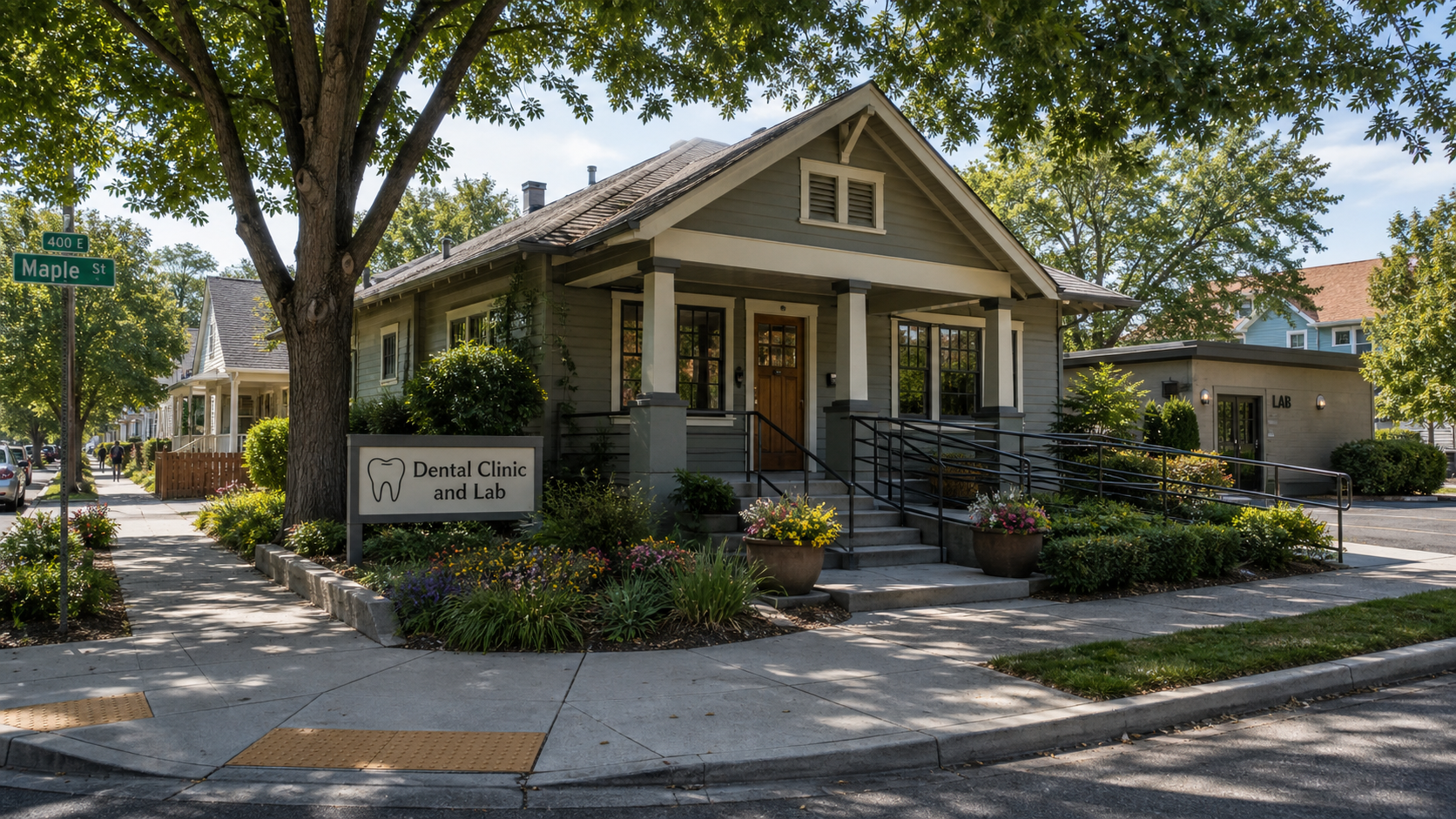
Meet the Dental Clinic and Lab
How this module works
What you will explore
The dental team and visit flow
Notice how preparation, patient welcome, chairside support, office tasks, lab work, documentation, and follow-up connect.
Training and student life
Build a possible student week with class, terminology, lab practice, infection-control learning, study, travel, and questions for a current program.
Fit and next steps
Consider patient interaction, detail, hand skills, communication, pace, practical needs, and what you want to verify next.
Who you will meet
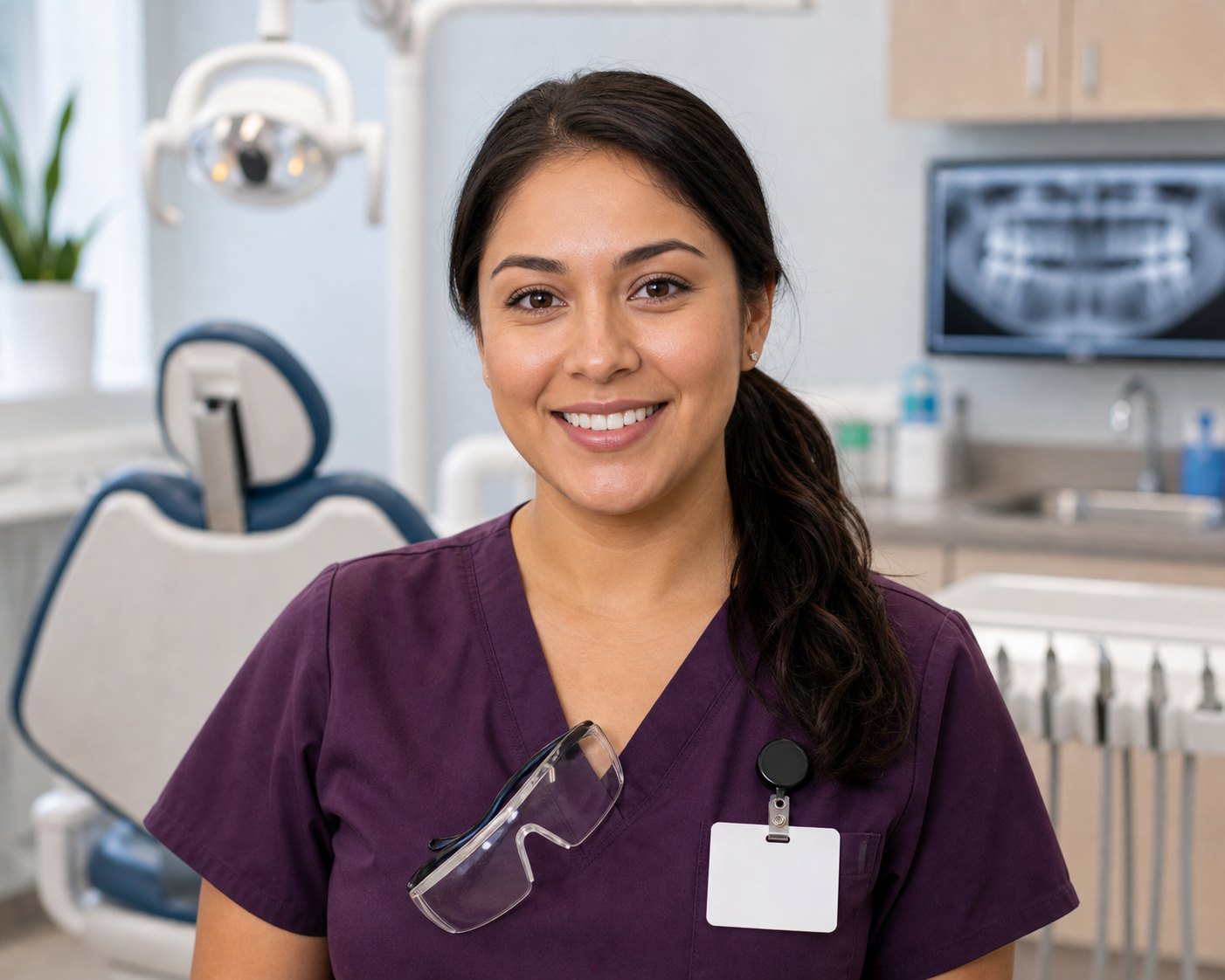
Marisol Vega
Marisol is a fictional registered dental assistant. She is friendly and precise. She prepares rooms, supports infection control and chairside work, documents assigned information, and helps nervous patients understand what happens next.
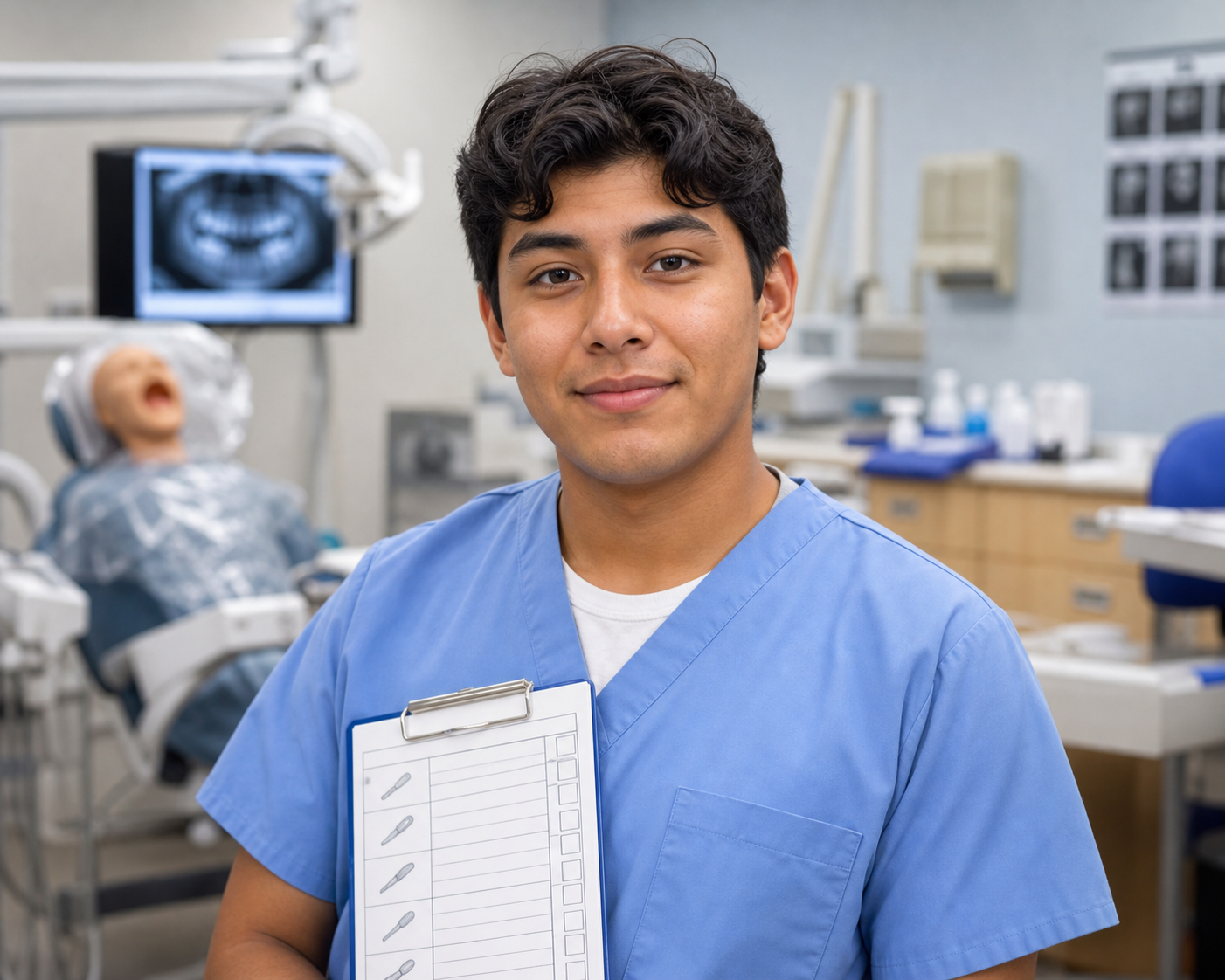
Nico Alvarez
Nico is a fictional dental assisting student who likes hands-on work. He practices terminology, approved lab routines, patient communication, and asking for help when a tool or direction is new.
The story question
How do preparation, infection control, and patient trust shape a dental visit?
A fictional patient arrives nervous for a dental procedure. Marisol prepares the room, supports the team, and uses clear communication. Nico watches for the professional habits behind a smoother visit.Four units in this module
Enter dental health technology
Meet the team, map the dental visit, and explore why readiness and patient trust matter.
Week in the life of a dental health student
Build Nico’s possible week and identify one pressure point, one support, and one program question.
Week in the life of dental health work
Follow a fictional visit through preparation, communication, chairside teamwork, documentation, and reset.
Dental health technology fit check
Reflect on the meaningful parts, demands, practical factors, and your next question.
Dental health technology quick guide
Dental assistant
Dental assistants may support patient comfort, room and tool readiness, records, scheduling, and chairside workflow under a dentist’s direction.
- Duties vary by state, training, certificate, supervision, and workplace.
- In California, use the current Dental Board table before assuming a task is allowed.
Registered Dental Assistant
RDA is a California license category. Program completion, certificates, exams, application review, licensure, and employment are separate steps.
- California lists more than one pathway to RDA licensure.
- Required courses and other rules can change, so verify the current Board page.
Dental laboratory technician
Dental laboratory technicians make or repair dental appliances and restorations from work orders. Many have limited patient contact.
- The work can combine fine hand skills, materials, digital tools, and quality checks.
- Education and employer preferences vary.
Same setting, different route
“Nearby” means real occupations that may share a dental setting or workflow. It does not mean the roles have the same duties or that one automatically leads to another.
- Examples include dentist, dental hygienist, dental laboratory technician, and dental office roles.
- Each role has its own training, license, supervision, and employer requirements.
Activity lineup
Pathway Quick Guide
Compare dental assistant, RDA, dental laboratory technician, and nearby roles. Write one difference and one fact to verify.
Dental Team and Workflow Map
Place at least four roles around a dental visit. Add one preparation task, one communication task, one office or lab connection, and one question.
Build Nico’s Student Week
Make a possible week with class, terminology, lab practice, infection-control learning, study, travel, life needs, and support. Mark one question to ask a current program.
The Work Before the Chair
While listening, record three to five keywords, one idea you are curious about, and one word you want to discuss or reflect on.
Marisol’s Ready Room
Make five choices about preparation, observation, communication, teamwork, escalation, and career reflection. You will not diagnose or choose treatment.
Patient-Trust Workflow Board
Build a four-part team board with the context, what is noticed, what can be said, and who needs the update. Produce one clear trust-building message.
Dental Health Technology Fit Check
Consider patient interaction, detail, hand skills, infection-control habits, communication, schedule, cost, travel, and support. Your response may stay private.
Career Passport Reflection
Choose yes, maybe, or not right now. All three are valid. Record one clue, one question, and one possible next step.
Podcast transcript
Use this text alternative for The Work Before the Chair.
Read the complete podcast transcript
Welcome to the CareTown Dental Clinic and Lab.
My name is Marisol Vega. I am a fictional CareTown registered dental assistant. The career I help you explore is real, but this story is not a real patient case and it is not medical training.
When people picture a dental visit, they may picture the chair, a bright light, or the moment a dentist begins an examination.
I picture the work before the chair.
Before a patient enters the room, the team checks the schedule, approved records, room status, supplies, equipment readiness, and information that still needs to be confirmed. We follow the workplace's current process. We do not guess that an item is ready because it looks ready.
Preparation may be quiet. It can still shape the whole visit.
As you listen, keep your Podcast Keyword Catcher nearby. Notice words that describe professional habits, not just job titles. Your words might include readiness, exact, trust, privacy, or team. Choose the words that stand out to you.
Imagine a fictional CareTown visit. A patient arrives and says, "I am nervous because I do not know what happens next."
That sentence matters. It is not an invitation to promise an outcome or answer a question outside my role.
I can listen. I can acknowledge the concern. I can explain the next nonclinical step in clear language, protect the patient's privacy, and connect the patient with the qualified team member who can answer a clinical question.
Patient trust is not built by pretending to know everything. It grows when the team communicates honestly and follows through.
Several people may help a dental visit move from arrival to follow-up. Dentists, dental hygienists, dental assistants, registered dental assistants, dental laboratory technicians, and office staff have distinct preparation, duties, and responsibilities. They may share information and a workplace, but the roles are not interchangeable.
As a registered dental assistant, I support assigned parts of room readiness, infection prevention, patient communication, documentation, and chairside workflow under the appropriate direction. What a dental assistant or registered dental assistant may do depends on current state rules, education, certificates, supervision, and the workplace.
A dental laboratory technician may make or repair dental appliances and restorations from work orders. That work can involve fine hand skills, materials, digital tools, and careful quality checks, often with less patient contact. An office team member may focus on scheduling, records, billing, or communication. Different roles can fit different strengths.
No one person is the whole dental team.
The visit is also more than the time a patient spends in the chair. Information moves from scheduling to arrival, from the clinical team to the laboratory when applicable, and into documentation and follow-up. If one detail is unclear, the professional response is to pause, state what is known, and ask the appropriate person.
Infection prevention is part of that workflow. It includes trained people following current rules, workplace procedures, and approved processes for the setting. For career exploration, you might notice sealed supplies, protective equipment, readiness checks, and room-reset responsibilities. You should not use this story to handle instruments, clean or reprocess equipment, operate dental or imaging equipment, or copy a procedure.
After one patient leaves, the work continues. Assigned documentation may need attention. The team prepares for what comes next. Questions or incomplete information need to reach the right person. The schedule may be moving quickly, but speed does not make guessing safer.
Some parts of dental assisting can feel rewarding. Helping a nervous patient feel respected can matter. Supporting a prepared team can matter. Seeing detailed work come together can matter.
Meaningful does not mean easy.
The work may involve close patient contact, protective equipment, repeated infection-prevention routines, standing, bending, fine hand movements, detailed records, time pressure, and patients who feel fear or pain. Workplaces and schedules vary. Current job duties, technical standards, support options, and reasonable accommodations need an individual conversation. A disability does not automatically answer the fit question.
Nico Alvarez is a dental assisting student in CareTown. Nico likes hands-on work. He is learning that confidence does not come from touching every unfamiliar item or copying a step he has seen once. It grows through approved practice, repetition, feedback, and knowing when to ask before acting.
His training week may include dental terminology, class, infection-prevention learning, supervised lab practice, studying, test preparation, travel, and preparation for an externship. Depending on the program and career goal, he may also need to ask about radiography education, attendance, lab or externship hours, required supplies, costs, technical standards, health or background requirements, and student support.
The calendar matters. A class schedule may not show travel, study time, or supervised learning at another location. A realistic plan includes school, work, meals, rest, transportation, and the people or services that can help when the week gets crowded.
In California, registered dental assistant, or RDA, is a license category. California lists more than one possible route to licensure. Program completion, required education or certificates, application review, licensure, and employment are separate steps. Requirements and permitted duties can change.
That is why Nico should verify information with the current program and the Dental Board of California before planning or applying. Chaffey College is one real regional program example he could investigate, not a CareTown program or a guarantee. He should check the college's current program status, approval and accreditation information, application cycle, schedule, costs, and supervised-learning expectations. An official program page, the Dental Board, and a current employer can answer different questions.
You do not need to choose a dental pathway today.
Maybe you enjoy patient communication and detailed routines. Maybe laboratory work sounds more comfortable than close patient contact. Maybe you are curious about the hands-on learning but need answers about time, cost, or the work setting. Maybe another CareTown pathway fits better.
Yes, maybe, and not right now can all be honest answers.
Look at your Podcast Keyword Catcher. Circle one word that changed how you see dental health work. Then write one question you would ask a current program, the Dental Board of California, an employer, a dental professional, a counselor, or a student.
A smooth visit may look simple from the waiting room.
Behind it is a team choosing preparation, clear communication, and trust—before the chair and after it.
Reflection prompt: Which part of the work before the chair—readiness, patient communication, infection prevention, teamwork, documentation, or learning—would you want to understand better, and what current source or person could help you verify it?
Choice 1 of 5
Marisol’s Ready Room
Patient-Trust Workflow Board
Your team product
Write one note in each box. Then add: (1) one phrase that may help a nervous patient feel respected, (2) one detail the team should not guess about, and (3) one question Nico should ask before acting.
Support option: Your instructor may read the prompts aloud, offer printed phrase cards, assign one box per person, or let you complete only two boxes plus the final question.
Meaningful does not mean easy
What can feel meaningful
Helping a nervous patient feel respected, making a room ready, supporting a smooth team, and seeing careful work come together can feel rewarding.
What may be demanding
The work may include close patient contact, fine hand skills, repeated infection-control routines, protective equipment, standing or bending, detailed records, time pressure, and people who feel pain or fear.
What to verify
Ask about current program schedules, costs, technical standards, lab and externship hours, health or background requirements, support options, reasonable accommodations, permitted duties, and employer expectations. A disability does not automatically answer the fit question.
Regional examples to verify
Chaffey College Dental Assisting
A real regional program example. Verify the current program status, approval and accreditation, application cycle, prerequisites, schedule, costs, certificates, and supervised learning directly with Chaffey and the appropriate approving organizations.
San Bernardino County Dental Assistant I
A real local employer class specification. It shows one employer’s description and requirements; it is not proof of a current opening or a rule for every dental workplace.
California approved-program list
The Dental Board’s official list helps students check whether an RDA program or required course provider is currently Board approved. Provider status can change, so confirm with both the Board and provider.
Module resources
Student materials
Workbook will be added here Learning deck will be added hereListen and read
Play The Work Before the Chair Read podcast transcriptCareer Passport
Reflection pages will be added hereYou will be able to record a yes, maybe, or not-right-now response, one reason, one question, and one next step.