
Module 5 · Outpatient and Community Care Pathway
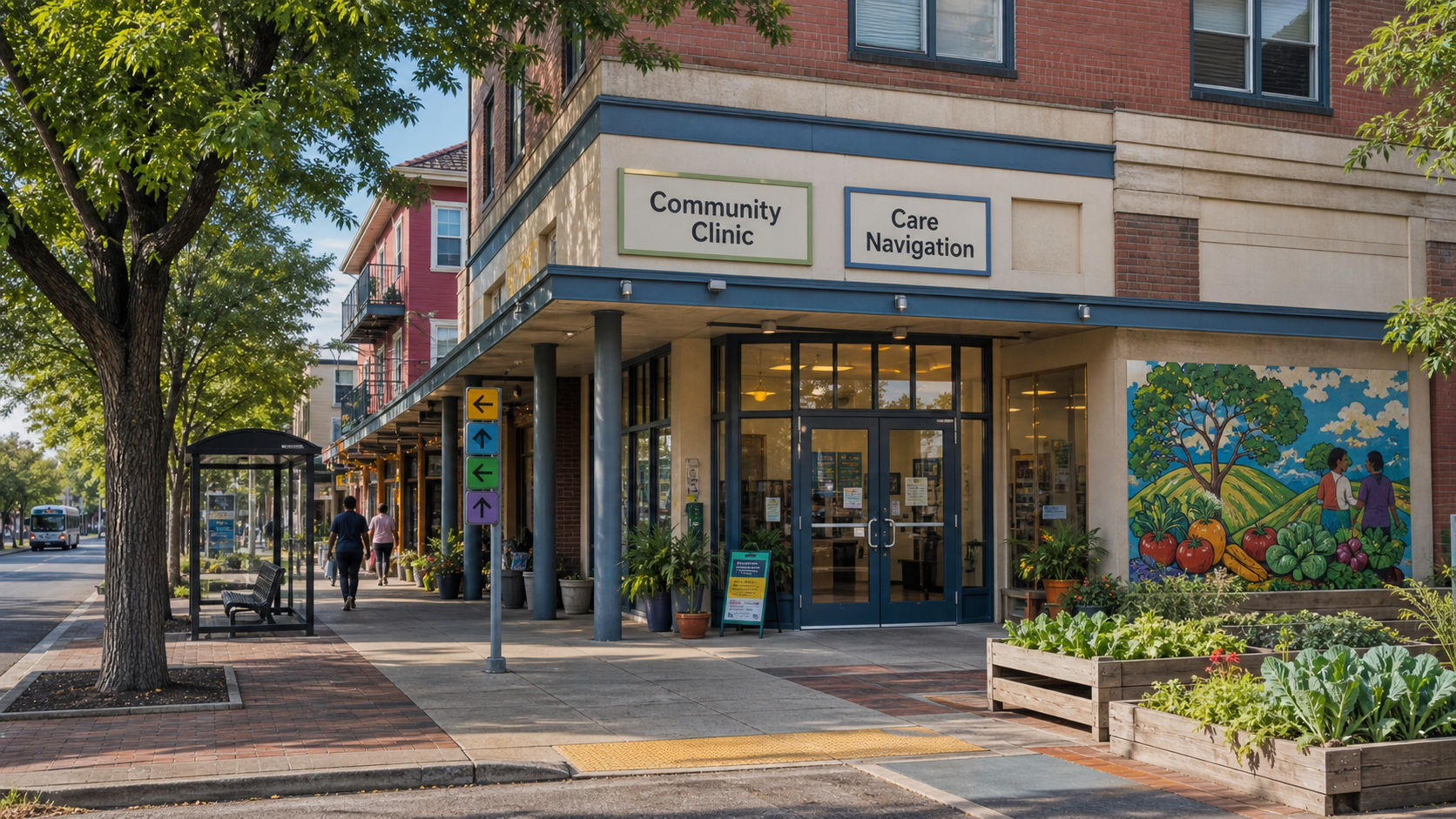
Community Clinic and Care Navigation Center
Follow a clinic visit from welcome to follow-up. You will explore how people, details, and resources connect so patients can move through care with respect and clear information.
How the course fits together
The full CareTown journey
Welcome comes first. After that, your class can visit pathway modules in any order.
One pathway visit
This module is a four-hour visit to outpatient and community care.
One hour of the visit
Each unit has one purpose. Your class may do one, two, or all four units at a time.
One task inside a unit
You may read, listen, map, choose, discuss, write, or reflect during an activity.
Start your visit
Meet Rosa and Amara

Rosa Martinez
Rosa is a medical assistant and care coordinator. She helps patients move through visits, understand next steps, and connect with resources.

Amara Wilson
Amara is a medical assisting student. She is learning clinic skills, clear communication, organization, and kind professional boundaries.
Four one-hour units
Enter outpatient and community care
Meet clinic, rehabilitation, community health, and patient-navigation roles. Map how a patient moves through a visit.
Week in the life of an outpatient/community care student
Balance class, skills practice, study, travel, life needs, support, and possible externship or fieldwork expectations.
Week in the life of outpatient/community care work
Explore patient flow, preparation, exact communication, documentation, resource connection, and teamwork.
Outpatient/community care fit check
Consider people contact, multitasking, technical tasks, coaching, boundaries, movement, schedules, and your next question.
Pathway and roles quick guide
Medical assistant
May support patient intake, vital signs, records, room preparation, scheduling, and approved tasks under supervision in a clinic.
Phlebotomy technician
Collects blood samples within the certificate level and workplace process. California certification and training rules apply.
Community health worker or navigator
May help people understand services, prepare for visits, reach resources, and work through barriers. Duties vary widely.
Rehabilitation, dialysis, EKG, and patient support
“Nearby” means real occupations that may share an outpatient setting or workflow. It does not mean the roles have the same duties or that one automatically leads to another. Training, certification, job duties, and supervision are different for each role.
Activity lineup
Outpatient and Community Care Role Guide
Compare clinic support, technical tasks, resource connection, and nearby roles. Write one duty and one question for each area.
Patient Flow and Care Team Map
Arrange a fictional visit from arrival to follow-up. Add the role that receives each handoff and one question the team must clarify.
Build Amara's Week
Plan a sample week with class, skills practice, study, travel, food, rest, and support. Mark one pressure point and one possible support.
Beyond the Exam Room: Closing the Loop
While you listen or read, record three to five words, one idea you want to discuss, and one question to verify.
Rosa's Follow-Up Visit
Make choices about listening, preparation, exact information, teamwork, and asking for help. You will not diagnose or choose treatment.
Care Navigation Huddle
Turn exact facts and a stated barrier into a respectful team handoff. Finish with a four-part map the class can review.
Outpatient and Community Care Fit Check
Mark what interests you, what may be hard, what support could help, and whether your answer is yes, maybe, or not right now.
Reflection and Next Question
Record one role, one work reality, one training question, and one next step. Your fit answer may stay private.
Podcast transcript
Use this text alternative for Beyond the Exam Room: Closing the Loop.
Read the complete podcast transcript
Welcome to the CareTown Community Clinic and Care Navigation Center.
My name is Rosa Martinez. I am a fictional CareTown medical assistant. In this workplace story, I also support assigned care-coordination tasks that stay inside my training, supervision, and job description. The career I help you explore is real, but this story is not a real patient case and it is not medical training.
When people picture an outpatient clinic, they may picture an exam room and a short conversation with one healthcare professional.
I picture the whole visit.
As you listen, keep your Podcast Keyword Catcher nearby. Notice words that describe connection, boundaries, and follow-through.
There is the welcome, the schedule, the record, the room, the questions, and the handoffs. After a patient leaves, there may still be information or follow-up that needs to reach the right person.
That is why I think of outpatient care as work that stretches beyond the exam room.
Imagine a fictional CareTown visit. A patient returns after missing an earlier follow-up appointment. Part of the record is incomplete.
It would be easy to make up a reason. Maybe the patient forgot. Maybe the visit did not seem important. Maybe someone did not try hard enough.
Those are guesses, not facts.
Instead, I welcome the patient, protect their privacy, and ask a respectful question through our approved process. The patient explains that transportation affected the missed visit.
Now the team has useful information in the patient's own words. That information is not a diagnosis, and it does not give me permission to promise a solution. It gives me something accurate to document and route to the qualified team member or approved resource.
My workflow has four simple ideas: notice, ask, connect, and close the loop.
Notice the exact information without adding a story.
Ask respectfully instead of blaming.
Connect the question or stated barrier with the right role or resource.
Then close the loop by following the team's process for documentation, confirmation, or follow-up.
Closing the loop does not mean I personally solve every problem. It means I do not let important information disappear between people.
A clinic visit may involve a front-office worker, medical assistant, nurse, physician or another qualified clinician, pharmacy team member, imaging worker, laboratory worker, community health worker, or patient navigator. Each person has a different job. Clear handoffs help the team work together without pretending those roles are interchangeable.
No one person is the whole system.
Medical assistants may support intake, records, room preparation, scheduling, vital signs, and other approved tasks under the required supervision. The exact duties depend on the workplace and current rules. Care coordination and navigation titles can also mean different things at different organizations.
The pathway is wider than one job title.
A student might investigate medical assisting, phlebotomy, EKG work, patient care support, dialysis support, rehabilitation support, community health, or patient navigation. Some roles involve technical tasks. Some focus more on communication, organization, or resource connection. Some require a particular certificate, license, training program, or employer-based preparation.
Sharing a clinic does not mean sharing one training route.
Amara Wilson is a fictional medical assisting student in CareTown. She likes helping people and is discovering that warmth works best with organization, privacy, and professional boundaries.
Her training week is not just one class. It may include coursework, skills practice, studying, travel, test preparation, meals, rest, and life responsibilities. A program may also include supervised externship or fieldwork expectations, attendance rules, technical standards, health or background requirements, and costs beyond tuition.
In practice, Amara uses fictional information and works with an instructor. She does not answer clinical questions independently or perform tasks outside her supervised student role. When she is unsure, she asks. That is not a weakness. It is a professional habit.
The work week has its own realities.
An outpatient setting may have regular daytime hours, but schedules vary. A day can include repeated tasks, many people, standing, private information, fast changes, upset patients, and pressure to keep the visit moving without losing an important detail.
There can also be meaningful moments. A person may feel heard instead of blamed. A confusing next step may become clearer. A team may catch a gap before it grows. Often, that progress comes from ordinary actions done carefully—not from one person arriving as a hero.
If this pathway interests you, verify the exact role before choosing a program. Ask what the job title means at that employer. Check current California requirements, program admissions, costs, schedules, supervision, fieldwork, technical standards, and support options. For medical assisting and phlebotomy, current California agency information matters. For community health, navigation, rehabilitation, dialysis, EKG, or patient-support roles, ask which requirements apply to that exact position.
A familiar title is a starting point, not a promise of admission, certification, licensure, or employment.
Now look at your Podcast Keyword Catcher. Record three to five words while you listen or read.
Maybe your words are exact, privacy, boundary, connect, or follow-through.
Choose one idea you want to discuss. Then write one question you need to verify with a current program, employer, California agency, counselor, or worker in the role.
As you think about fit, notice what draws you in and what gives you questions. Do you enjoy meeting people, organizing details, switching between tasks, explaining information clearly, and working as part of a team? What schedules, movement, transportation, costs, or support needs would you want to understand?
Your answer can be yes, maybe, or not right now.
The goal is not to choose a career today. The goal is to see the work more clearly.
In outpatient and community care, a respectful welcome matters.
So does what happens next.
Choice 1 of 5
Rosa's Follow-Up Visit
Care Navigation Huddle
Meaningful and challenging parts
What may feel meaningful
You may help people feel welcomed, make information easier to understand, connect someone with a useful resource, or help a busy team stay organized.
What may be demanding
The work may include many people, repeated tasks, standing, fast changes, private information, upset patients, schedule pressure, and careful follow-through.
What to verify
Ask about job duties, supervision, schedules, physical tasks, fieldwork, technical standards, support options, and reasonable accommodations.
Regional examples to verify
Medical assistant
San Bernardino County has used this title in outpatient settings. A class description can show one employer's duties and requirements; it is not proof of an open job.
Community connection roles
Students may see titles such as community health worker, health education assistant, or patient navigator. The title, duties, and entry route can differ by employer.
Technical and rehabilitation support
Phlebotomist, rehabilitation services aide, dialysis technician, EKG technician, and patient care technician are examples to investigate, not one shared training path.